
"Ugandan coffee"
700 article(s) found

Ugandan coffee with thick taste and low acidity introduces fine coffee.
The equator runs across Uganda, and the suitable climate makes it the main producing area of Robbins coffee beans (Robusta) in the world. In the 1960s, Ugandan coffee production remained at 3.5 million bags a year. By the mid-1980s, coffee production had dropped to 250 bags a year, mainly for political reasons. But now coffee production is on the rise again, currently about 3 million bags a year. Coffee

Introduction to which is better to describe the taste and flavor of raw beans instead of Ugandan coffee
Uganda Coffee Uganda is a landlocked country in eastern Africa, straddling the equator, bordering Kenya to the east, Tanzania and Rwanda to the south, the Democratic Republic of the Congo to the west and Sudan to the north. Most of the territory is located in the Central African Plateau, with lakes, with an average elevation of 1000,000,000 meters above sea level. There are many lakes and plateaus in the mountains, which are known as the water villages of the plateau. The western branch of the East African Rift Valley runs through the western border, with many rivers and lakes at the bottom of the valley. Black Gan

Taste of Ugandan Coffee Flavor Manor area introduction to the origin of fine coffee in Uganda
There are many transportation problems, so there are often raw beans with low moisture content and not green appearance. However, Ugandan coffee is not a type of coffee that emphasizes rising aroma, as long as the raw beans are not and turn 100 or yellowed, they can generally have a good flavor in the producing area, with low ripe fruit aromas, such as the taste of red wine, and thick mellow thickness. with some Kenyan beans with low tonality

Delicious Ugandan Coffee Flavor Description Grind Fine Coffee Features Estate Introduction
Ugandan coffee beans have a unique flavor and fragrance, which is very suitable for making Italian and other flavors of coffee. More importantly, Ugandan coffee beans are strictly screened according to international market standards to ensure their high quality and pollution-free characteristics. Africa is home to Arabica and Robusta, two major coffee varieties, while East Africa enjoys a plateau of water and the pearl of East Africa.

Recommended brewing methods for Ugandan coffee
Following Caf é (Wechat official account vdailycom) found that Beautiful Cafe opened its own small shop in Uganda Coffee. Recommended hand-brewing method: 15g Grinding degree: Pegasus scale 3.5Flushing Water temperature: 90 degrees Celsius Coffee Powder and brewing Water ratio: 1:15, pour in about 225g water brewing time: 2 minutes 30 seconds flavor: strawberries, raisins, rum, Earl Grey Tea,

Top Ugandan coffee Mbale Bugisu coffee factory and Budadiri coffee factory essence
Uganda (Uganda) aroma 3% brightness 4% mellow 4% flavor 4% aftertaste 4% suitable for baking degree: Full city / Espresso suggested to enter the second explosion, at this degree there will be a very obvious chocolate flavor, if baked a little deeper is quite suitable to be mixed into the Espresso formula. It takes a mature period after baking, so you will get the most complete after three or four days.

Flavor characteristics of Ugandan coffee the difference between Ugandan Bugishu AA coffee and Kenyan coffee
For the exchange of professional baristas, please pay attention to the coffee workshop (Wechat official account cafe_style) East African Great Graben (that is, Rift Valley) connecting Weidoria Lake and Elgon Mountain is a famous and important boutique coffee belt in East Africa. The eastern side of Mount Elgon is one of the important coffee producing areas in Kenya, while the western side of Mount Elgon, the western highland on the Ugandan side, also produces great coffee.

Description of taste and flavor of Ugandan coffee beans introduction to grinding scale of variety treatment method in producing areas
Uganda coffee beans taste and flavor description the processing method of Uganda coffee varieties grinding scale introduces that Ugandan coffee beans have a unique flavor of delicate flavor, which is very suitable for making Italian and other flavors of coffee. More importantly, Ugandan coffee beans are strictly screened in accordance with the standards of the international market to ensure their high quality and pollution-free characteristics. Africa is the two main varieties of coffee, Arabica and Ro.

Introduction of Ugandan coffee flavor with mild soil flavor
Ugandan coffee is not a type of coffee that emphasizes rising aroma, as long as the raw beans are not and turn 100 or yellowed, they can generally have a good regional flavor, with a low ripe fruit aroma, such as the taste of red wine, and a thick mellow thickness. it is similar to some Kenyan beans with low flavor, but it also has a mild soil flavor, so it is similar to other products in East Africa in flavor characteristics.
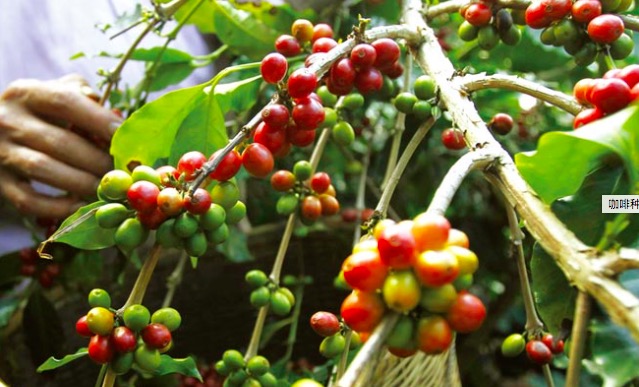
In order to win the top coffee market in Europe, the United States and Japan, Ugandan coffee is not good enough to go to prison.
Uganda does not hesitate to put illegal farmers in jail in order to improve the quality of coffee beans, but experts believe that this can only be achieved by introducing farming programs, education and other incentives. ■ Farming projects, education and other incentives should be used to boost coffee quality rather than arrests. Coffee beans are an important export from Uganda.

Introduction to the flavor of Ugandan coffee beans, which is quite different from other East African countries in flavor characteristics.
Mbale on the eastern side of Mount Elgon and other producing areas on the western side near the border of the Democratic Republic of the Congo have the export name Wugar. The official ranks are Oaganic (Organic), Bugisu AA, Bugisu A, Bugisu B, Bugisu PB, Wugar, Drugar and other unlisted grades. To find a good Ugandan coffee, you must first recognize BugisuAA and A.

Introduction of Ugandan coffee beans with mild climate and suitable for growing coffee
Uganda leads Africa in coffee production, accounting for more than 70% of its total exports. In the 1960s, Ugandan coffee production remained at 3.5 million bags a year. By the mid-1980s, coffee production had dropped to 2.5 million bags a year, mainly for political reasons. But now coffee production is on the rise again, currently about 3 million bags a year. Mainly exported to the European Union, including Germany and Italy

Introduction to the standard sour taste and low taste of Ugandan coffee bean grading method
Uganda coffee beans are classified according to the standard sour taste and low taste. Uganda coffee beans have a unique flavor of delicate flavor, which is very suitable for making Italian and other flavors of coffee. more importantly, Ugandan coffee beans are strictly screened according to the standards of the international market to ensure their high quality and pollution-free characteristics. Africa is the hometown of Arabica and Robusta, the two major varieties of coffee.

Description of flavor of Starbucks Ugandan coffee beans introduction of varieties produced by grinding scale
Starbucks Uganda coffee bean flavor description grinding scale production area variety introduction Uganda coffee production is among the highest in Africa, accounting for more than 70% of its total exports, while Uganda is also the hometown and main producing area of Robbins specialty coffee. In the 1960s, Ugandan coffee production remained at 3.5 million bags a year. By the mid-1980s, mainly for political reasons, coffee production

Ugandan coffee beans belong to robustamol taste characteristics graded flavor description method
Ugandan coffee beans belong to Robstamol, taste characteristics, graded flavor description, the output of Farobusta species accounts for 25% 35% of coffee bean production, its main producing country is Indonesia (one of its coffee beans is a kind of coffee beans processed by washing method, it is a hybrid between Robusta and Arabica, and it is the only coffee that can be used as a single drink in the Chinese market.

Description of the Flavor of Ugandan Coffee introduction to the varieties treated in the manor area
Uganda coffee flavor description manor area treatment varieties Uganda's coffee production is among the highest in Africa, accounting for more than 70% of its total exports, while Uganda is also the hometown and main producing area of Robes specialty coffee. In the 1960s, Ugandan coffee production remained at 3.5 million bags a year. By the mid-1980s, coffee production had dropped to an annual rate, mainly for political reasons.

Flavor description of Ugandan coffee bean taste graded production area introduction of taste variety manor
Ugandan coffee beans taste graded regional flavor description taste variety manor introduces the tenacious resistance of people all over Uganda to British aggression. In 1893, Britain sent troops to occupy the Kingdom of Bunioro, and King Kabarega led some of the people to wage guerrilla warfare for six years. In 1897, King Mwaanga of Buganda raised his army against Britain and later joined Kabarega in the Rango area.

A brief introduction to the treatment method of grinding degree and baking degree of high-quality and pollution-free Ugandan boutique coffee beans
Most of Uganda is located in the Central African Plateau, with lakes, with an average elevation of 1000 mi 1200 meters. There are many lakes and plateaus in the mountains, which are known as the water villages of the plateau. The western branch of the East African Rift Valley runs through the western border, with many rivers and lakes at the bottom of the valley. Uganda has a great Victoria lake, coupled with the high mountains, which makes Uganda a mild climate suitable for growing coffee, although it spans both sides of the equator. Right and wrong in Uganda

Very light aroma Ugandan coffee Flavor Taste Manor Features Fine coffee Introduction
In the 1870s, British colonists attempted to annex parts of Uganda, but were thwarted by the Bunyoro Kingdom. In the late 1970s, the English and French Christian churches successively went to the Kingdom of Buganda to preach. They meddled in politics and caused sectarian strife. Years of war, so that the rapid decline of the Buganda Kingdom Ugandan people throughout the British invasion of tenacious resistance. In 1893, British troops invaded Buneau.

Introduction to the characteristics of Ugandan coffee bean flavor and taste manor
Ugandan coffee is not a type of coffee that emphasizes rising aroma, as long as the raw beans are not and turn 100 or yellowed, they can generally have a good regional flavor, with a low ripe fruit aroma, such as the taste of red wine, and a thick mellow thickness. it is similar to some Kenyan beans with low flavor, but it also has a mild soil flavor, so it is similar to other products in East Africa in flavor characteristics.